
vanity mirror with led lights
Understanding Taper Thread Ring Gauges Taper thread ring gauges are essential tools used in various engineering and manufacturing applications to ensure the correct dimensional and functional characteristics of tapered threads. These gauges are designed to check the accuracy and quality of the threads on components, typically used in piping systems, hydraulic fittings, and other applications where a secure fit is critical. At their core, taper thread ring gauges consist of a precision-machined ring that is made to match specific thread profiles and dimensions. The most common standard for tapered threads is the American National Standard Taper Pipe Thread (NPT), but there are other standards such as BSPT (British Standard Pipe Taper) and ISO standards that are also widely utilized in various industries. One of the primary functions of a taper thread ring gauge is to verify that the threaded components meet the required tolerances. This includes checking the angle of the thread, pitch, and overall diameter. The gauge will typically have both a go and a no-go side. The go side is used to determine whether the threaded component can fit correctly, whereas the no-go side is to ensure that the component does not exceed tolerances or may be considered defective. taper thread ring gauge The importance of taper thread ring gauges cannot be overstated. In applications where leaks can lead to catastrophic failures or safety hazards, having reliable and accurate threading is paramount . A poor quality thread can compromise the integrity of the entire assembly, leading to potential operational failures and costly downtime. Adoption of taper thread ring gauges also adheres to quality control standards that many industries are obligated to follow. Regular inspection using these gauges supports compliance with industry regulations, ensuring that manufacturers maintain high-quality production standards. In addition to their practical application in manufacturing, taper thread ring gauges are vital in educational settings, where students and trainees learn about precision engineering and quality assurance. By understanding how to use these gauges, individuals can appreciate the intricate details involved in producing reliable threaded components. In conclusion, taper thread ring gauges play a crucial role in maintaining the integrity and performance of tapered threading in various applications. Their precision and reliability serve as the backbone for quality assurance in manufacturing, making them indispensable tools in ensuring safety and performance standards within the industry. Whether in production lines or an educational environment, understanding and utilizing taper thread ring gauges is essential for any engineering professional.
about
vanity mirror with led lights
Understanding the Uses of Magnetic V Blocks Magnetic V blocks are essential tools in a wide array of machining, fabrication, and assembly processes. They combine the functionality of traditional V blocks, which are designed to hold cylindrical objects, with a powerful magnetic base that offers precision and stability. This article delves into the various applications, benefits, and considerations of using magnetic V blocks in different industries. What are Magnetic V Blocks? Magnetic V blocks are specialized devices that feature a unique V-shaped groove, enabling them to securely hold round or cylindrical workpieces. The magnetic base ensures that the block adheres firmly to the work surface, providing stability during machining or inspection processes. They are typically made from high-quality steel or cast iron, designed to endure rigorous mechanical operations. Applications in Machining and Fabrication 1. Precision Hold for Machining One of the primary uses of magnetic V blocks is in machining operations. They are instrumental in securely holding pieces while milling, drilling, or grinding. The magnetic grip allows for quick setup and repositioning, significantly reducing downtime and improving workflow. 2. Inspection and Measurement In quality control processes, magnetic V blocks are invaluable. They provide a stable platform for measuring instruments, ensuring that measurements are accurate and reliable. Whether you're using calipers, micrometers, or dial indicators, the secure hold reduces the risk of movement that could compromise data. 3. Welding Applications In welding, magnetic V blocks enable fabricators to position components accurately. The strong magnetic hold allows operators to concentrate on welding without worrying about misalignment, ensuring cleaner welds and stronger joints. This is particularly useful in pipe and tube fabrication, where precision is paramount. magnetic v block uses 4. General Assembly Operations In assembly lines, magnetic V blocks can assist in holding parts in place while they are fastened or connected. They streamline the assembly process, allowing for quick adjustments and reducing the chance of errors, particularly in high-volume manufacturing environments. Benefits of Using Magnetic V Blocks - Efficiency The magnetic feature allows for rapid setup and adjustments, saving valuable time in production processes. - Precision The stability provided by the magnetic hold enhances accuracy, leading to better quality outcomes in machining and assembly. - Versatility Magnetic V blocks can be used across various materials and applications, making them an indispensable tool in multiple industries such as automotive, aerospace, and manufacturing. - Ease of Use With simple on/off switches to activate or deactivate the magnet, these blocks are user-friendly and safe, even for operators with minimal training. Considerations When Using Magnetic V Blocks While magnetic V blocks offer numerous advantages, there are factors to keep in mind for optimal use - Surface Material Magnetic V blocks adhere best to ferromagnetic surfaces. On non-magnetic surfaces, their effectiveness diminishes. - Load Capacity Each magnetic V block has a specific load capacity. It’s crucial to ensure that the workpiece weight stays within the limits to avoid slippage or damage to the block. - Maintenance Regular maintenance and cleaning of magnetic surfaces are essential to maintain the strength of the magnetic hold and prevent debris accumulation that could affect performance. Conclusion Magnetic V blocks are an essential component in many engineering and manufacturing processes. Their ability to securely hold round objects while allowing for precise machining and measurement enhances productivity and accuracy across various applications. As technology advances and industries demand greater precision and efficiency, the reliance on tools like magnetic V blocks will likely continue to grow. Understanding their uses, benefits, and best practices ensures that operators can maximize the potential of these versatile tools, leading to better quality products and streamlined operations. Whether in a machine shop, assembly line, or inspection lab, magnetic V blocks are tools that facilitate precision and efficiency in today's fast-paced industrial landscape.
-

High quality industrial productsagement

High quality industrial products
View Details -

Meet the diverse needs of customers

Meet the diverse needs of customers
View Details -

Strict quality control

Strict quality control
View Details -

Top raw materials

Top raw materials
View Details -

Trusted supplier

Trusted supplier
View Details
Our application

news and information
Using a Spirit Level for Accurate Measurement Techniques and Applications
Understanding the Spirit Level and Its Measurements The spirit level, also known as a bubble level,
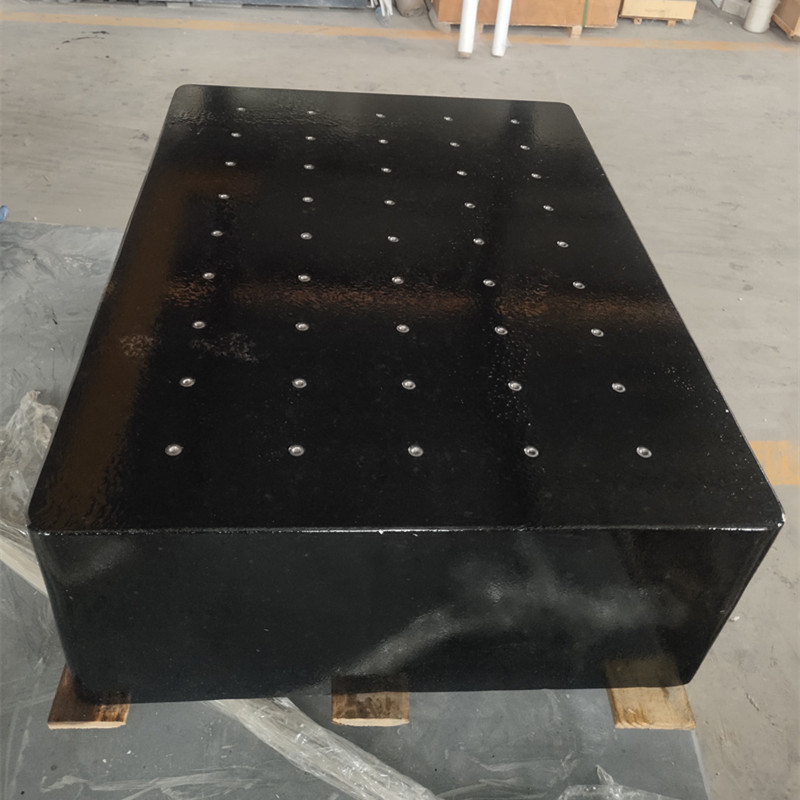
Welding Tables Available for Purchase at Competitive Prices
welding tables for sale .

Valve Automation_ Benefits of Motorized Control Systems
In today’s rapidly evolving industrial landscape, automation has become synonymous with efficiency,
 English